Habitat |
|
Closely associated with man, this species is widespread throughout the northern hemisphere and Europe in particular.
H. pseudospretella requires a high proportion of animal protein in it's diet including feathers, wool and hair - a diet which is reflected in its behaviour as a scavenger.
|
Biology |
|
Complete metamorphosis life cycle. Eggs are laid singly within the food substrate. Hatch occurs between 10 and 40 days depending upon conditions. Larvae produce silken tunnels within the substrate and may exist 2 - 5 months before pupation. Diapause may extend the effective length of the life cycle.
|
|
|
Hofmannophila pseudospretella
Insecta Lepidoptera Oecophoridae
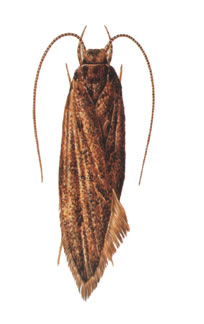
Image Copyright - Aventis Environmental Science 1964. Reproduced with kind permission of Aventis Environmental Science.
Send this page to a friend
|
|
Pest Status |
|
Widespread and common in both domestic situations and food storage environments. Of particular note in food preparation and museum surroundings where it's presence may pose a threat to public health and stock. Occurrences may be linked with birds nests.
|
Control |
|
Removal of birds nests, and general aggregations of food / organic matter are recommended. Frequent vacuuming of these areas will reduce the breeding potential by physical removal of all stages in the life cycle. Where appropriate, use of a residual insecticide spray will provide control.
|
|