Habitat |
|
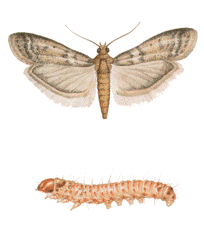
Less cold hardy than the warehouse moth, this species may not overwinter in temperate climates, and is often found after being introduced in incoming stock. In other respects, similar to E. elutella.
|
Biology |
|
In warmer climates, where this species is able to breed, emergence starts in the spring and continues to autumn. Females may lay several hundred eggs over several weeks. Larvae pass through 5 or 6 moults after hatch, and may be detected by the presence of larval silk in and around the infested commodity. When pupation draws near, hey generally migrate away from the foodstuff, and climb walls in search of crevices in which to pupate.
|
|
|
Pest Status |
|
Possibly the most commonly occurring of storage moth pest species globally. This species is frequently found in food storage situations where it may contaminate foodstuffs with frass, webbing or silk.
|
Control |
|
As in all food storage situations, the quarantine of incoming goods is recommended as a means of prevention of infestation. Where necessary and permitted, use of residual insecticides to resting places, and space spraying timed to coincide with adult emergence have been proven as effective means of control. Population monitoring with pheromone traps can allow good targeting of treatment.
|
|