Habitat |
|
World-wide distribution including tropical and temperate zones. It's main occurrence as a public health pest is in restaurants, hotels, prisons hospitals and multi - family housing. Refuse areas out of doors also provide habitat.
|
Biology |
|
Nocturnal foragers, dark brown - black coloration with oily appearance. Incomplete metamorphosis, with immature stages being similar to the adult in appearance. Male identified by wings covering two thirds of the abdomen. Wings vestigial in females. Females may produce up to 5 egg cases (ootheca) over their lives each containing up to 16 nymphs.
|
|
|
Blatta orientalis
Insecta Dictyoptera Blattidae
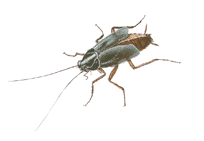
Image Copyright - Aventis Environmental Science 1964. Reproduced with kind permission of Aventis Environmental Science.
Send this page to a friend
|
|
Pest Status |
|
A major public health pest, responsible for economic loss in food production from tainted stock, and the contamination of equipment and medical supplies. Many pathogenic bacteria have been found to be carried, including salmonella, implicating B. germanica as a disease vector.
|
Control |
|
As with all cockroach control programmes, an integrated approach involving the use of monitoring traps, insecticidal baits and well targeted use of contact insecticides where appropriate is recommended. Night time inspections may be necessary in difficult to control infestation situations in order to identify key harbourage areas. Harbourage denial and proofing are also effective.
|
|