Habitat |
|
Sitroga cerealella is extensively distributed, and cosmopolitan in its habitat choice. The common name Angoumois Grain Moth comes from the first documentation of this species as a pest of grain in Angoumois, France. This species will generally attack damp grain in preference to old dry grain, although dried stored grain is still at risk, as is grain in the field. Sitroga will readily oviposit in and infest barley, rye, corn, oats, rice, and various seeds.
|
Biology |
|
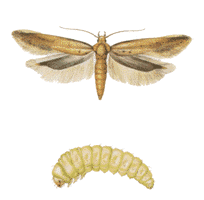
The female may lay from 40 to 300 eggs. The Angoumois Grain Moth is active during the winter, even in temperate climates, and hence is responsible for a sizeable economic loss during this time. . During the warm months, eggs hatch after an incubation period of four to eight days. Larvae will then bore into the grain, spinning a silken web behind them. The larval stage will generally last three weeks, and include three instars or stages. The full grown larva may reach 5mm length. In colouration, they are white with yellow brown around the head. Pupae are reddish brown, with small legs and four pseudopods. In warm conditions, the lifecycle may be completed in 5 - 7 weeks.
|
|
|
Pest Status |
|
The Angoumois Grain Moth is responsible for spoiling large quantities of stored grain every year. Infestations of S. Cerealella are characterised by effects on the grain such as a sickening smell and taste often rendering the grain unpalatable. Deposits of frass and debris are commonly found on the surface of infested grain.
|
|