|
Inorganic
Insecticides
|
|
WHAT
ARE INSECTICIDES?
|
|
Organochlorines
|
|
Inorganic
minerals such as heavy metals and arsenical compounds
have been used as insecticides, although they
are usually toxic to a wide range of organisms,
and in general are not specific in their action.
|
|
|
|
|
The
word "Insecticide was first used about 130
years ago, although primitive insecticides have
been in use for several thousands of years.
Several categories of insecticides exist:
- Inorganic
- Organochlorines
- Organophosphates
- Carbamates
- Botanicals
- Miscellaneous
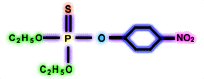
Parathion
- An
Acetylcholinesterase
inhibitor
|
|
|
|
|
| Advances
in the 1930's with synthetic organic chemistry led
to the rapid development of OC molecules.
Their use is now increasingly restricted. |
|
|
Carbamates
|
Organophosphates
|
| Synthetic
versions made available in the early 50's, Carbamates
are generally quick acting with relatively low mammalian
toxicity, although exceptions do exist. |
|
|
This
group varies widely in its insecticidal activity
and mammalian toxicity. Mode of action is
the inhibition of the enzyme Cholinesterase -
crucial for normal nervous impulse transmission.
|
|
|
Botanicals
|
Miscellaneous
|
|
Insecticides
of vegetable origin. Many are still used today.
This class of molecules includes Pyrethrin, Nicotine
and Derris.
|
|
| Biologicals,
Fumigants, and other types of insecticide are classified
in this section. |
|
|
|
|