Habitat |
|
Extensive distribution due to ready flying capabilities, and the ability to overwinter as pupae or adults.
|
Biology |
|
Mated female houseflies are capable of laying batches of up to 150 eggs at one time. Eggs are laid in groups upon a food substrate suitable for the resulting larvae, which hatch between 8 and 48 hours subsequent to laying. Development moves through several instars until pupation which occurs away from the food source in drier conditions. Adults emerge after several days.
|
|
|
Musca domestica
Insecta Diptera Muscidae
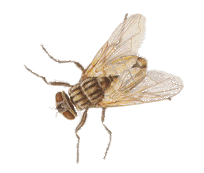
Image Copyright - Aventis Environmental Science 1964. Reproduced with kind permission of Aventis Environmental Science.
Send this page to a friend
|
|
Pest Status |
|
Significant as vectors of disease, houseflies transmit intestinal worms, dysentery, gastro-enteritis, typhoid, cholera and tuberculosis. As they will feed indiscriminately on faecal matter and human food, their status as a vector is well noted. Flies liquefy food by regurgitating digestive juices, stomach contents and enzymes onto food before ingestion.
|
Control |
|
Physical control means are the first stem in controlling housefly infestations. Removal and exclusion of refuse which acts as breeding sites is essential. Often, space sprays with knockdown action are required - consult local regulations for available products.
|
|