Habitat |
|
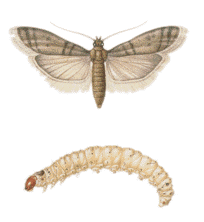
Ephestia elutella |
|
Pest
Status |
|
|
|
|
Widely distributed in temperate zones, it breeds
most successfully indoors in stored food situations e.g. food factories, warehouses and
shops. This species attacks a wide range of
commodities, although it does not seem to attack white flour. |
|
|
|
|
|
|
|
|
|
|
|
|
The most common and serious moth pest of food
storage in the UK. Physical damage to stored foods can be significant, however, the
main problem caused by infestations of E. elutella is the contamination of foods by the
silk produced by the larvae which may end up in packaged product or in extreme cases, jam
machinery. |
|
|
|
|
|
| |
|
| |
|
| |
|
| |
|
| |
|
| |
|
| |
|
| |
|
| |
|
| |
|
Biology |
|
The
Cocoa, Warehouse or Tobacco Moth |
|
Control |
|
|
|
|
Complete metamorphosis life cycle. Adults
emerge in the spring and mate. Females may lay up to 200 eggs over 2 weeks.
Larvae are active, secreting and depositing large amounts of silk within the
micro-habitat. After 5 or 6 moults, they move upwards toward wall / ceiling
junctions where they secure themselves for pupation and emergence after diapause. |
|
|
|
|
|
|
|
|
|
|
|
|
Good hygiene, harbourage denial and quarantine
of inbound stock are recommended. Any insecticidal treatments that may be applicable
should be timed for adult emergence to achieve maximum effect. Residual sprays should be
targeted at resting places and harbourage areas. Monitoring traps can be used as an
indication of emergence. |
|
|
|
|
|
| |
|
| |
|
| |
|
| |
|
| |
|
| |
|
| |
|
| |
|
| |
|
| |
|
| |
|
|
|
|
|
|
|


